
ABIDJAN, CÔTE D’IVOIRE, In the rapidly evolving landscape of African infrastructure, few leaders bridge the gap between academic precision and gritty, on-the-ground execution quite like Dr. Jules KONAN. As a graduate of the prestigious Institut National Polytechnique Félix Houphouët-Boigny (INP-HB) in Yamoussoukro, Dr. Konan has spent nearly two decades transforming the public works sector (BTP) in West Africa.
Seventeen years ago, he founded Ingénierie & Travaux Akoutrou (ITA). Today, the company is a multi-award-winning powerhouse certified in ISO 9001 and ISO 45001, recognized for delivering massive urban hydraulics, sanitation, and civil engineering projects. We sat down with Dr. Konan at his Abidjan headquarters to discuss his journey, his leadership philosophy, and what it takes to engineer a continent’s future.
The Foundations of Leadership
Q: You graduated from INP-HB, which is widely considered one of the elite crucibles for scientific talent in Africa. How did that rigorous academic background shape the leader you are today?
Dr. Jules Konan: INP-HB doesn’t just teach you formulas; it teaches you structural discipline and an unyielding respect for method. In civil engineering, there is no room for approximation. A single miscalculation can compromise an entire community’s safety. That academic rigor instilled in me a culture of precision that I have injected into the very DNA of ITA. Every project we touch is backed by exhaustive data, strict risk management, and international standards. If you want to build structures that last for generations, your preparation must be flawless.
Q: Looking back over the 17 years since you founded ITA, what was the driving personal ambition that pushed you to start your own firm rather than joining an established multinational?
Dr. Konan: I saw a massive gap between the complex infrastructure projects being designed on paper and the actual, lived realities of our populations. Global corporations often bring copy-paste solutions. I wanted to build an indigenous African powerhouse that possessed world-class technical capabilities but operated with a deep, localized understanding of our specific environmental and social constraints. The ambition was to prove that an Ivorian company, led by Ivorian talent, could outperform international benchmarks.
Engineering with a Social Conscience
Q: You often talk about engineering having a “social conscience.” What does that mean to you in practice?
Dr. Konan: To me, concrete, steel, and pipes are just means to an end. The real end product is human dignity. When ITA designs an adduction network for potable water or a massive urban drainage system, we aren’t just looking at cubic meters per hour or structural load capacities. We are looking at a mother who no longer has to walk kilometers for clean water, or a neighborhood that will no longer face catastrophic flooding during the rainy season. True engineering isn’t about the size of the monument you build; it’s about the scale of the human problem you solve.
Q: West African cities are experiencing some of the fastest urbanization rates in the world. How does that reality change your day-to-day approach to engineering?
Dr. Konan: It means we have to design for tomorrow, not today. If you build infrastructure based solely on current demographic data, it will be obsolete by the time it is inaugurated. We have to anticipate growth, changing climate patterns, and shifting urban mobility needs. This is why we specialize heavily in the intersection of urban hydraulics and civil works. You cannot build a sustainable road network without mastering the water management systems underneath it. They are completely inseparable.
Cultivating Collective Intelligence
Q: ITA is famous for its unique corporate culture, particularly your focus on human capital and team autonomy. How would you describe your management style?
Dr. Konan: I believe in decentralized responsibility and what I call ‘collective intelligence.’ Rigid, top-down hierarchies stifle innovation and slow down execution. At ITA, we treat our management structure as a fluid system of knowledge transfer. We give our young engineers massive autonomy on active project sites, but we back them with a safety net of rigorous corporate procedures. I don’t want an organization that relies solely on my brain; I want an organization where individual field experience is continuously converted into shared, institutional competence.
Q: You’ve also made a very deliberate strategic choice to heavily invest in owning your own fleet of heavy machinery, rather than relying on subcontractors. Why is that autonomy so important to you?
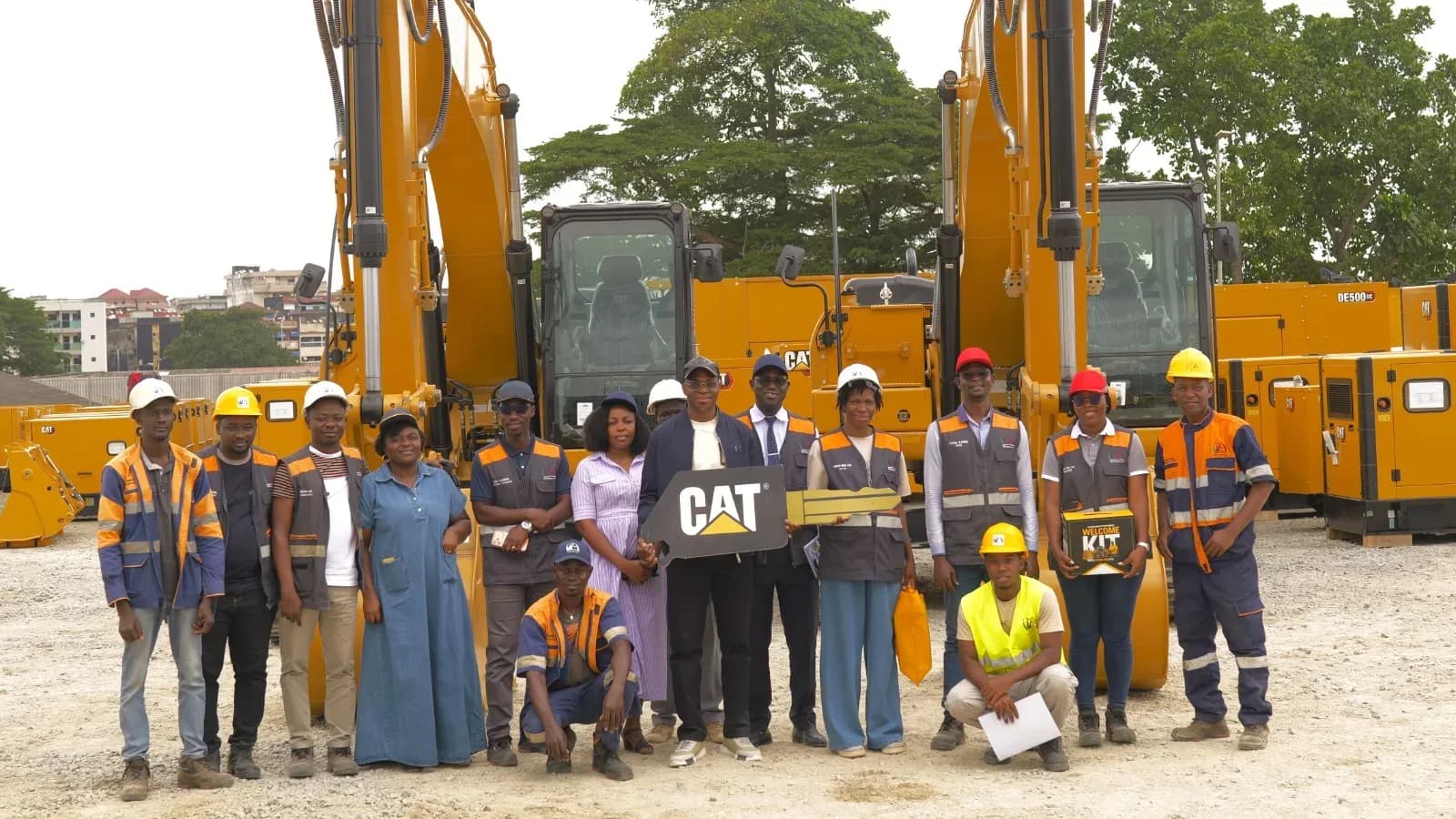
Dr. Konan: In our industry, dependence is the enemy of reliability. When you rely on third-party equipment providers or subcontractors, you hand over control of your timelines to someone else. By continuously upgrading and owning our proprietary fleet of specialized machinery, we guarantee our own operational speed. When a master of works or a government agency signs a contract with ITA, they are buying our sacred promise of deadline compliance. Total autonomy allows us to protect that promise.
The Vision Ahead
Q: In 2023, ITA received the National Quality Excellence Award from the Ivorian government. For you personally, what did that recognition mean?
Dr. Konan: It was a profound validation, not just for me, but for every worker who has sweat on our chantiers. It proved that our reliance on strict methodology, safety standards, and quality management works. But a prize is only a snapshot of past success. For me, it was a mandate to look further down the road.
Q: What is the next frontier for Dr. Jules Konan and ITA?
Dr. Konan: The next step is scaling this blueprint across the continent. The infrastructure deficit in Africa is vast, but so is our capacity to solve it. We have the technical expertise, we have the machinery, and most importantly, we have a generation of highly trained African engineers who are hungry to build their own continent.
ITA is ready to take the lessons we’ve perfected over 17 years in Côte d’Ivoire and apply them to the grand challenges of regional pan-African development. We are just getting started.