
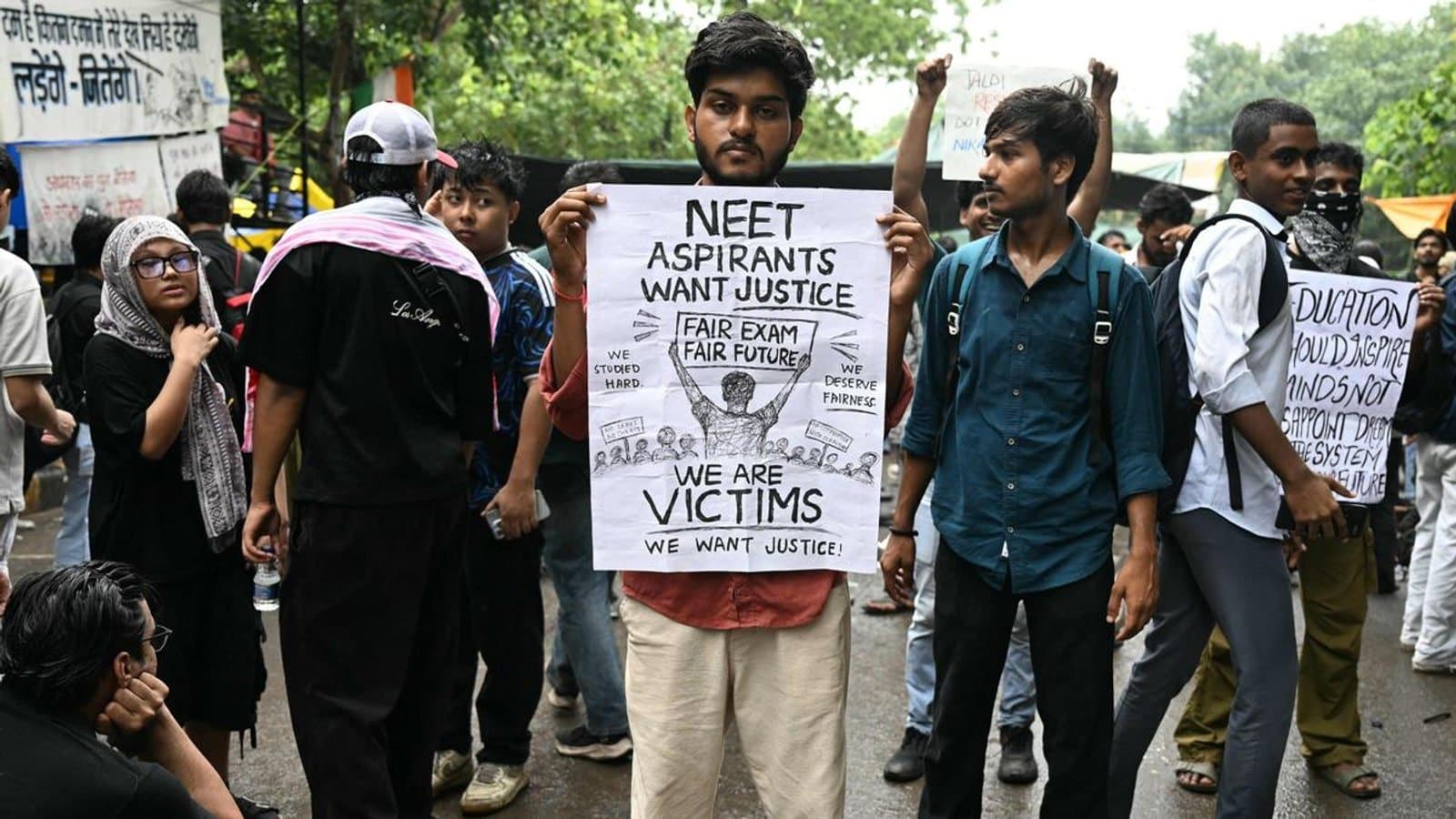
A lead comment in The Hindu takes the student demonstrations, carried out under the banner of the Cockroach Janta Party, as a point that has now been made and asks what should follow. Its answer is that the education system needs not an overhaul but a change of policy altogether, and that the goal should be examinations seen as fair, conducted professionally, and taken happily and voluntarily. Competitive examinations, it argues, should stop being associated with student suicides.
The diagnosis is exact and worth repeating in its own terms. India's education system has produced remarkable professional talent while its admission culture has built an emotional environment in which marks, ranks and single-shot examinations become the only accepted measure of intelligence, worth and future possibility. Anyone who has watched a seventeen-year-old absorb a rank as a verdict on their character knows this is not an exaggeration.
The word that carries the most weight in that prescription, though, is voluntarily. An examination is voluntary when a candidate has somewhere else to go. Consider what is on the other side of the door. India has roughly 15 million regular salaried jobs with a contract and social security, against some 300 million people aged 15 to 29. In 2024 about 30 lakh candidates sat for around 17,700 government posts, close to 170 for every vacancy. Graduates carry the highest unemployment rate of any group, at 22.7 percent. In a market shaped like that, no examination is voluntary. It is the only queue in sight.
This is why the humane education system being called for cannot be delivered by an education ministry alone. Every instrument that reform usually reaches for redistributes the scarce seat rather than adding to the supply. Better paper security stops the theft of a rank without creating another rank. Psychometric assessment and career counselling change how candidates are sorted, which matters, but sorting is not the same as absorbing. Continuous assessment in place of one paper spreads the pressure across three years instead of three hours, and for some children that is genuinely kinder while for others it simply means the anxiety never ends. None of these adds a single job at the far end.