
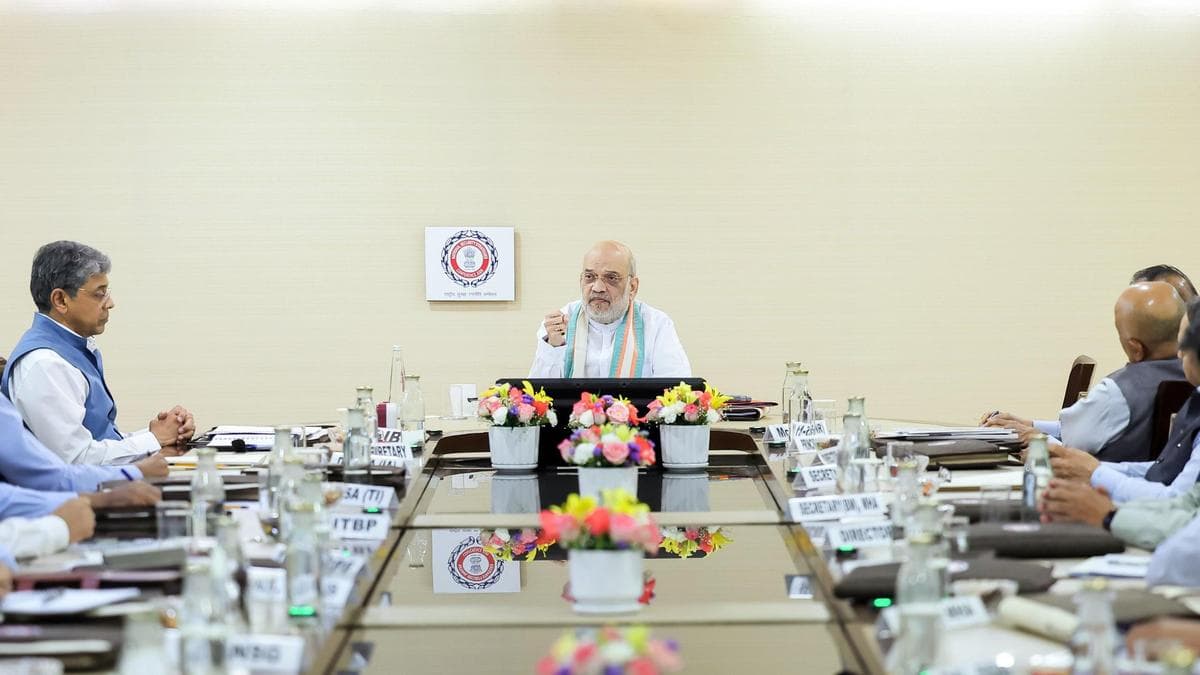
Union Home Minister Amit Shah told India's top security establishment that the country's various agencies must get better at spotting emerging threats early and moving to neutralise them before they have a chance to grow into full blown crises. He was speaking at the valedictory session of the Intelligence Bureau's National Security Strategy Conference in New Delhi, a hybrid gathering that drew more than 850 police, security and intelligence officers from across the country.
Shah asked the officers in the room to think in much longer timeframes than usual, urging them to project how threats might evolve over the next fifteen to twenty years rather than reacting to problems as they surface. He pointed to a cluster of challenges he wants security planning built around, including geopolitical instability, energy shortages, strained supply chains, radicalisation and the fast moving world of cyber threats.
On coordination, the Home Minister pressed for greater synergy between the country's security and intelligence agencies, framing better cooperation as essential to dismantling not just terror networks themselves but the wider support systems, financing and logistics that keep those networks running.
Shah also used the platform to restate the government's position on illegal immigration in blunt terms, saying India is not a dharamshala and that only its citizens have the right to live in the country. He described infiltrators as a threat that cuts across security, the economy and the country's demographic balance, and said the aim is to make India infiltrator free within a short span of time.
On narcotics, he directed state police forces to put the Narcotics Control Vision Document for 2026 to 2029 into practice on the ground, framing the work around three actions he called Detect, Disrupt and Destroy, with the stated goal of protecting the younger generation and moving the country toward being drug free.