
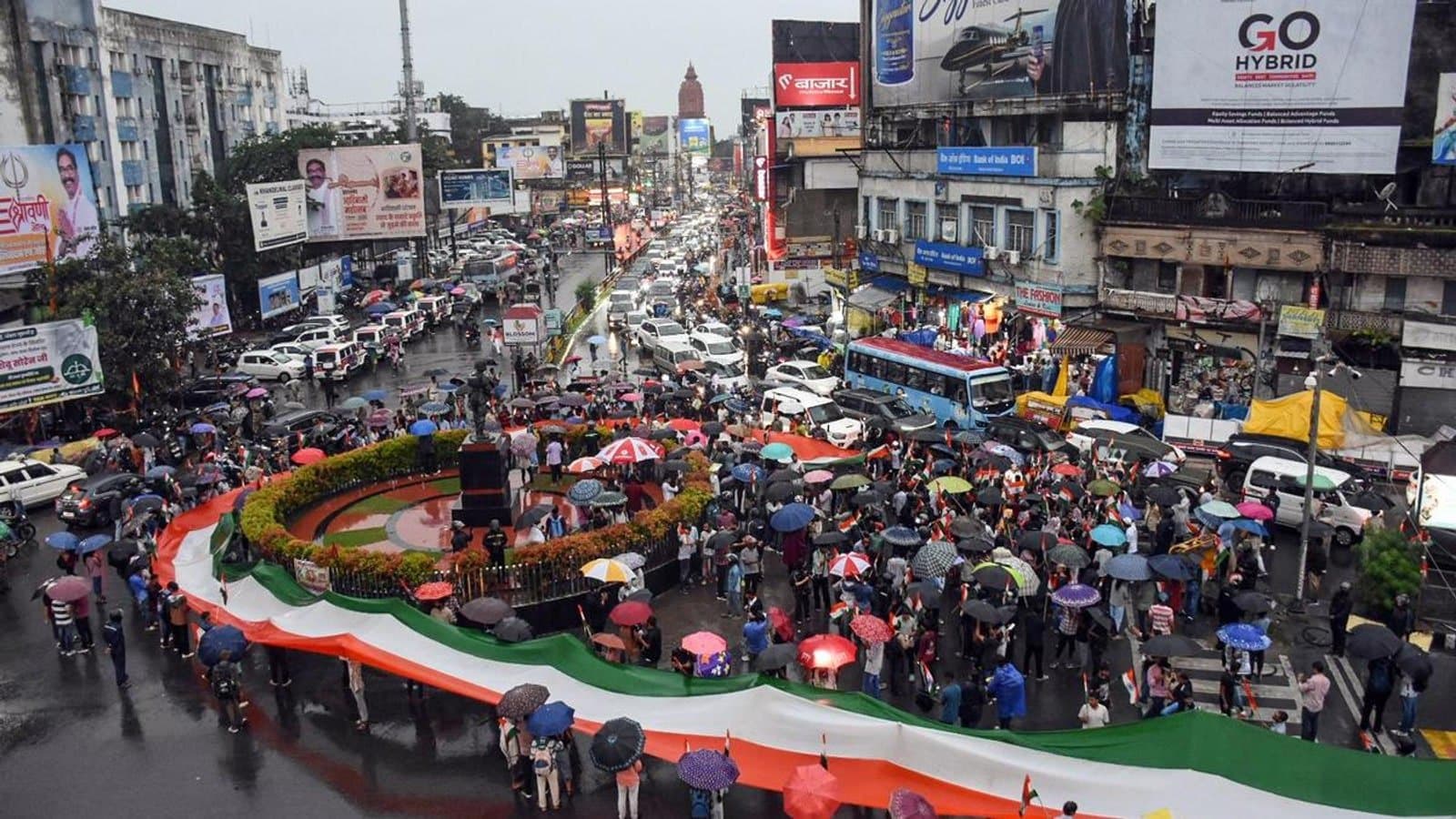
The protest over alleged examination irregularities in Jharkhand entered its thirteenth day on Wednesday, and the Congress said it stands in support of the students agitating for justice in Ranchi. The party's All India Congress Committee in charge for the state, K. Raju, posted that its youth wing and student wing leaders, joined by their national president and national secretary, had gone to express solidarity with students protesting over irregularities at the Jharkhand Public Service Commission and the Jharkhand Staff Selection Commission.
The Congress is in alliance with the Jharkhand Mukti Morcha led government. A delegation led by Raju met Chief Minister Hemant Soren and thanked him for setting up a ministerial committee to talk to the protesters and work out solutions.
That is the whole difficulty in two sentences. The party is simultaneously the ally thanking the chief minister for appointing a committee and the ally standing with the people who are on the street because nothing has been done. Both positions are sincere enough and they are not sustainable together for very long. A committee is the standard instrument for converting a protest into a process, and its usefulness to a government is that it moves the argument indoors. Whether it is also useful to the students depends on what it is empowered to recommend and how quickly, neither of which has been stated.
What the protesters are asking for is specific. The demonstration began on 25 July at Jaipal Singh Munda Stadium under the banner of the JPSC and JSSC Reforms Manch, and has become one of the larger student movements the state has seen in recent years. They want the fourteenth Jharkhand Public Service Commission civil services examination cancelled outright. They want an independent investigation into the alleged irregularities, either by the Central Bureau of Investigation or by a panel of retired High Court judges drawn from outside Jharkhand. And they want structural reform of both commissions.
The insistence that investigators come from outside the state is the detail worth noticing. It is not a demand about competence. It is a statement that the protesters do not believe an inquiry staffed from within Jharkhand would be allowed to reach a conclusion, and it is aimed at a government that includes the party now expressing solidarity with them. A ministerial committee, however well meant, is made of precisely the people that demand is designed to route around.
This is the same argument that has been running through the country since the paper leak protests began, and Jharkhand's version has the same shape as the rest. The grievance is not primarily that one examination went wrong. It is that the recruitment commissions are the main door into secure work in a state where such work is scarce, so an irregularity there is not an administrative lapse but a redistribution of the few available futures. That is why cancelling one examination is being demanded alongside reform of the bodies that run them. The students appear to understand that a fresh paper set by the same commission solves very little.