
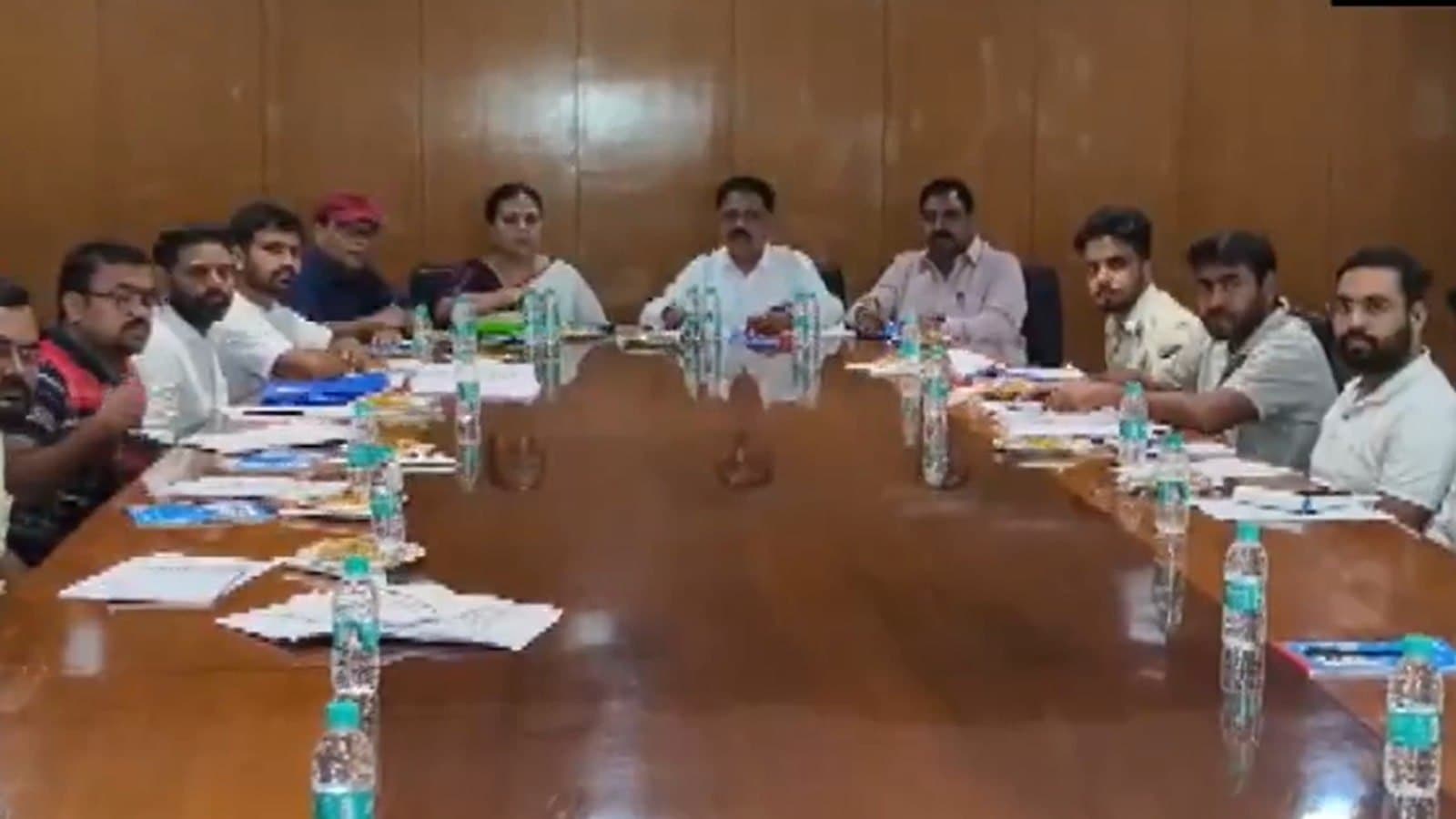
A sixth round of talks between the Jharkhand government and students protesting alleged irregularities in the state's recruitment examinations began on Sunday at the state guest house in Ranchi. The agitation is in its sixteenth day and six demonstrators are now on an indefinite hunger strike. A student leader said they were hopeful of a positive outcome on their central demands, which remain the cancellation of the fourteenth Jharkhand Public Service Commission civil services examination and reform of both the Public Service Commission and the Staff Selection Commission.
The group leading the protest is not reading the invitation as progress. The JPSC and JSSC Reforms Manch accused the government of political manoeuvring in announcing another round, saying the object was to split the students and shift public attention away from what they are asking for. Their specific complaint is about who else is being talked to. Having put their points to the government at a meeting on Friday night, they say the official panel then called in student bodies affiliated to the Congress and the Jharkhand Mukti Morcha, organisations they say had no part in the agitation, and accepted a separate charter of demands from them on Saturday.
Ravindra Paswan of the Manch put the objection directly, saying the government had taken memoranda from six or seven other organisations and asking what the intention behind that was. He singled out the National Students' Union of India, the Congress student wing, wanting to know why a body belonging to a party in the ruling alliance was submitting demands rather than standing on the street. Another protester, Prem Nayak, said the government was trying to placate them the way one placates children, and that what they want is for the Chief Minister to speak to them directly.
That last demand is the sharpest thing said all week, because it identifies the mechanism precisely. Six rounds, a ministerial committee, and memoranda accepted from half a dozen bodies produce a situation in which there is no longer any single counterparty whose agreement would constitute a settlement. Every additional channel dilutes the standing of the original one. Asking for the Chief Minister is not a demand for ceremony. It is a demand for someone on the other side of the table with the authority to decide, which a committee taking submissions from seven organisations by definition does not have.
This page noted three days ago that the Congress was in the awkward position of supporting a protest against a government it belongs to. The protesters have now made that the substance of their grievance rather than an observation about it, which is a sign the movement understands its own position well. It also gives the government a genuine problem, because the party wings it is talking to are the ones with the least incentive to escalate.
The pressure is nonetheless building along two lines. The hunger strike puts a clock on a process that otherwise has none, since rounds of talks can continue indefinitely and a fast cannot. A team of doctors from Sadar Hospital examined the strikers on Sunday, and Dr AP Sinha said they had refused hospitalisation despite losing weight, and were alert and stable for now. Separately, Paswan has warned of a march on the state assembly on 10 August if the demands are not met.
Opposition parties have found the movement, as they were always going to. The Jharkhand Loktantrik Krantikari Morcha legislator Jairam Mahto sat on a one day fast in Ranchi on Sunday in support, having sent a seven member delegation to the government committee the previous day without a breakthrough. A Janata Dal United spokesperson, Rajeev Ranjan Prasad, described the agitation as having grown into a mass movement. Neither intervention costs anything, and both are easier to make than the decision the students are actually waiting for.
What is at the centre has not moved since the students began gathering at the Jaipal Singh Munda Stadium in late July, carrying bedding, notebooks and folders of admit cards from examinations that in many cases have taken up most of a decade. They want the tainted examinations cancelled, an investigation by the Central Bureau of Investigation rather than one run from inside the state, and the recruitment system rebuilt. None of the three is the sort of thing a sixth round of talks settles unless someone with the power to concede is in the room.