
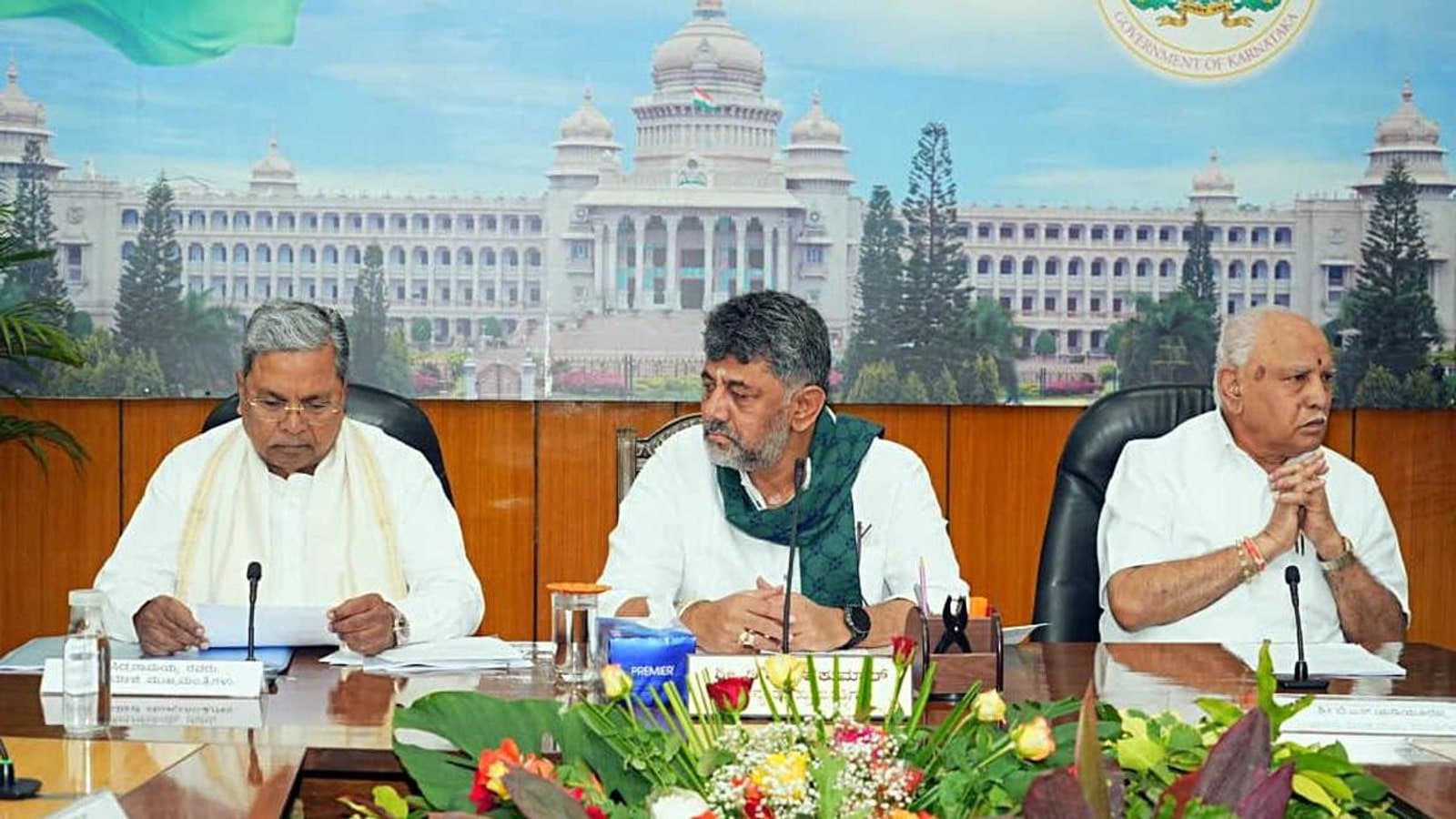
Chief Minister D.K. Shivakumar asked farmers' groups, Kannada organisations and opposition leaders on Sunday to withdraw the bandh called for 13 August against the release of Cauvery water to Tamil Nadu. The appeal followed an all-party meeting at his home office in Bengaluru, held after the Cauvery Water Management Authority directed Karnataka to release 3,500 cusecs a day for fifteen days.
His argument against the shutdown was practical rather than legal. The state is releasing water, the government is with the farmers, and the season is cooperating, so a bandh would close Karnataka's own schools and businesses without moving anything. Inflows into the four reservoirs in the basin were close to 68,000 cusecs on Sunday, though he cautioned that this could fall as the rain over Kodagu and the other catchments recedes. Karnataka needs to hold about 40 thousand million cubic feet, including four for evaporation, to cover drinking water. Kabini is full and releasing its natural flow, and water has gone into the canals.
This is the mirror of the letter Tamil Nadu's Chief Minister Vijay sent to the Prime Minister last week over Mekedatu, and it lands the same way. Positions on this river do not move when governments do. Shivakumar told the meeting that Karnataka has a tradition of parties setting differences aside on the Cauvery, and the room proved it: the opposition pledged support, and he had already met the Union Ministers C.R. Patil, Pralhad Joshi and V. Somanna alongside the former Chief Ministers Basavaraj Bommai and Jagadish Shettar before the authority's meetings. Two states, opposite demands, identical internal unanimity.
The most consequential remark of the day was not aimed at Tamil Nadu at all. Siddaramaiah, who held the office before him, told the meeting that going to the Supreme Court against a management authority order will not help, that such petitions have been dismissed before, and that Karnataka has to release water as the authority decides. Coming from a former chief minister, at a meeting convened to manage anger about exactly that release, this is a politician telling his own side that the litigation route is spent. He then named what should replace it: a distress formula that would give scientific and permanent relief.
That phrase is the whole problem in two words. The tribunal award and the judgment that affirmed it allocate the Cauvery in a normal year. What has never been agreed is the rule for a bad one, which is how the shortfall gets shared when the monsoon underdelivers. Without such a rule every deficient year is renegotiated from scratch under political pressure, and the state that is upstream at that moment is asked to absorb a loss it never contracted for. Karnataka wants a formula because Karnataka is upstream. That does not make the idea partisan. A downstream state has the same interest in knowing in advance what it will get in a drought instead of discovering it fortnight by fortnight.
Fortnight by fortnight is close to literal. Shivakumar expects the authority to keep meeting until January 2027, possibly every two weeks, and said the state must keep a legal team ready for each round. That is a revealing way to describe a river. The dispute has stopped being an annual crisis and become a standing negotiation with a fixed calendar, which is an argument for a standing rule rather than a standing legal team. A formula agreed once would settle what a lawyer is currently sent to argue twenty times a year.
The temperature is lower than the bandh call suggests. Shivakumar said Tamil Nadu and Karnataka are one and that he does not speak the language of others, noted that Vijay had wanted talks which were deferred until conditions improve, and described the DMK's petition in the Supreme Court as something the state is watching rather than answering. Rain has helped. The test comes if it stops, because the bandh is set for 13 August and the inflow figure he quoted on Sunday is the sort that changes within a fortnight. If it holds, the appeal will look like good judgement. If it falls, Karnataka will be asked to release water it no longer has, and everyone will be back to arguing about a formula that still does not exist.