
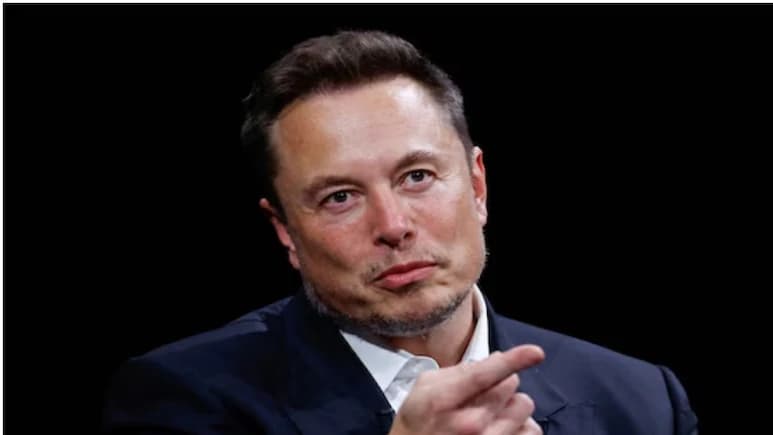
Elon Musk has once again publicly questioned why Starlink still cannot begin commercial operations in India, saying the company is licensed in more than 165 countries and has spent five years complying with every single law and requirement set by the Indian government. His post came in response to a claim that Starlink's paperwork was sitting idle for comments at the state owned Telecommunications Consultants India Limited.
The frustration, however, sits on top of a more layered reality than the phrase no licence suggests. Starlink already holds a Unified Licence from India's Department of Telecommunications, granted back in June 2025, covering authorisations for GMPCS, Commercial VSAT CUG and ISP Category A services. India's space regulator, IN-SPACe, separately cleared the company's Gen 1 satellite constellation the following month.
What Starlink does not yet have is everything needed to actually switch on a commercial service. The Department of Telecommunications has been clear that holding a licence does not automatically confer any right to spectrum, and that a separate frequency assignment must come from the Wireless Planning and Coordination Wing. Starlink was given provisional spectrum for trials in September 2025 and began security related testing around that time, but a final framework for commercial spectrum allocation is still being worked out.
Beyond spectrum, the company is also waiting on security clearance and foreign direct investment approval, both of which remained outstanding as of Musk's latest post on October 8. Union Telecom Minister Jyotiraditya Scindia has confirmed that Starlink does hold its Unified Licence, while maintaining that the company must satisfy every requirement, including security considerations, before the remaining approvals come through.
The gap between having a licence on paper and being cleared to launch commercially is where the current standoff sits, with Starlink pointing to years of compliance and India pointing to a regulatory sequence that has not yet run its course, leaving the timeline for an actual Indian rollout still unresolved.