
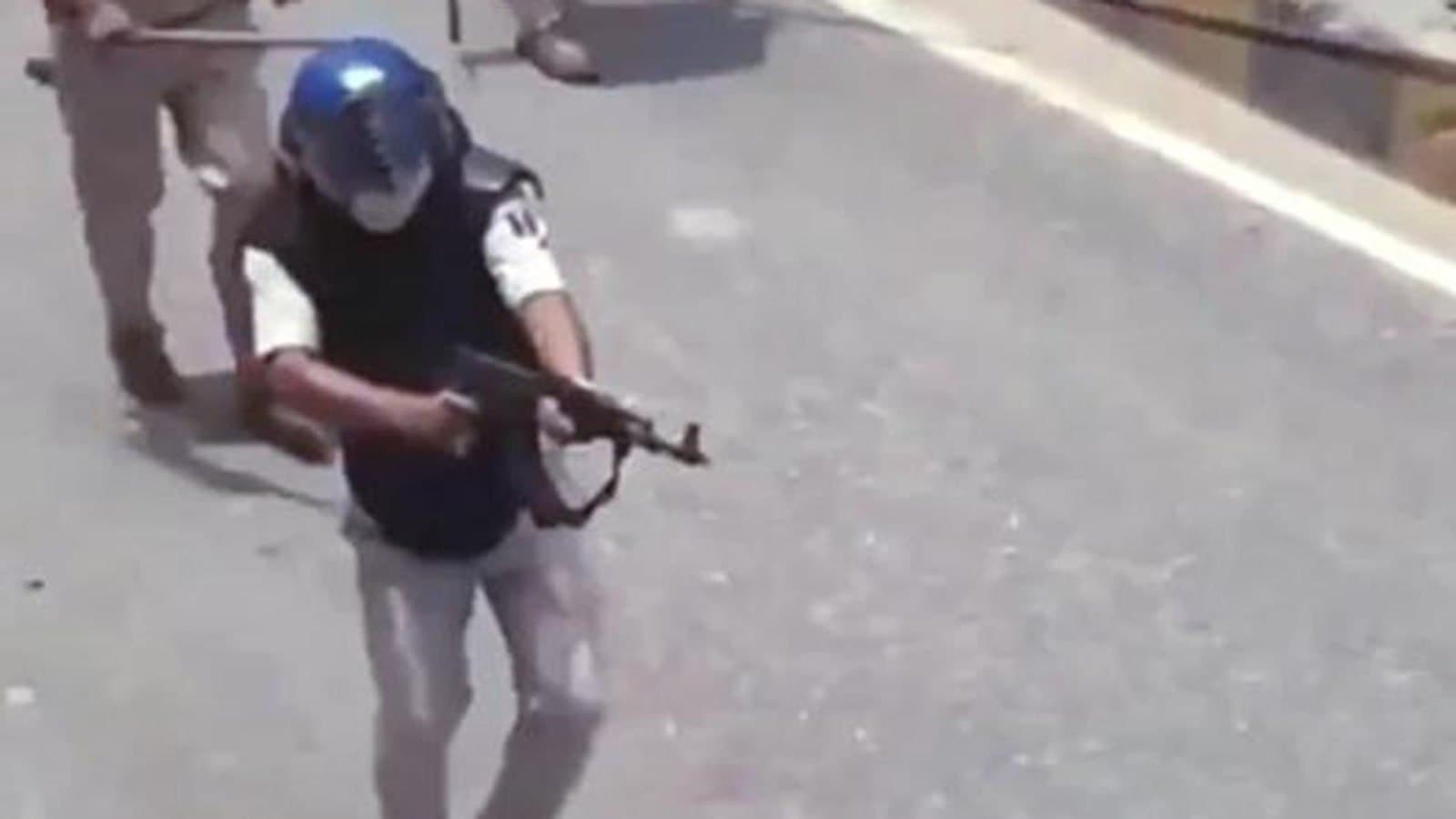
The Director General of Police in Bihar, Vinay Kumar, has barred the use of automatic assault weapons such as the AK-47 and the INSAS rifle by police deployed on law and order and crowd control duty. The order follows an incident on 25 July, during a state wide shutdown called amid the protests over the medical entrance paper leak, when a constable was recorded firing an assault rifle in Siwan.
The police account of that day is that the constable, Abhishek Kumar, discharged four rounds into the air after being surrounded by a crowd, and that nobody was injured. He was suspended immediately by the Siwan Superintendent of Police, Puran Kumar Jha, and departmental proceedings were begun. A Deputy Inspector General said the weapon had been used wrongly. The Superintendent said the force had been given clear instructions not to open fire during the demonstration.
That account differs from the one Rahul Gandhi gave in the signed column this page examined on 10 August, in which he wrote that student protesters in Siwan were shot at with firearms including an assault rifle and that many were severely injured. Both versions are now on the record and they are not compatible on the question of whether anyone was hit. Neither has been tested by an inquiry that has reported.
What is not in dispute is that the constable was already prohibited from doing what he did. The Bharatiya Nagarik Suraksha Sanhita requires that the least possible force and injury be used in dispersing an assembly. Police procedure sets out an escalation that begins with warning and persuasion, moves to barricading, then to tear gas, and treats firearms as a last resort where there is a serious threat to life. His own superintendent had issued instructions against opening fire. There was no gap in the rules on that day, and the order issued now does not fill one.
It does something different, and this is why it is more than a gesture. A rule about conduct asks a man surrounded by a crowd to make a correct judgement under fear. A rule about equipment does not ask him anything, because the rifle is not with him. Removing the weapon from the deployment is the only kind of restriction that does not depend on the composure of the person holding it, which is the entire argument for keeping assault rifles with the specialist units that handle armed insurgency and organised crime rather than issuing them to the constable sent to stand in front of students.
There are limits worth stating. Police and public order are state subjects, so no central law governs which weapon may be carried to a protest, and this order binds Bihar alone. It is a standing instruction from a Director General, not a statute, which means a successor can revise it and its life depends on it being enforced at the level of the district armoury rather than announced from Patna. India has watched the same pattern in other regulatory areas this month, where the instrument chosen turns out to be renewable, revisable or unenforced, and the announcement is mistaken for the change.
The test is therefore narrow and observable. Whether the next protest in Bihar is policed by officers carrying lathis, shields and tear gas alone will be visible in the video footage, which is how the Siwan incident became known in the first place. The departmental proceedings against the constable, and whether any independent inquiry examines what happened that day, will settle the rest.