
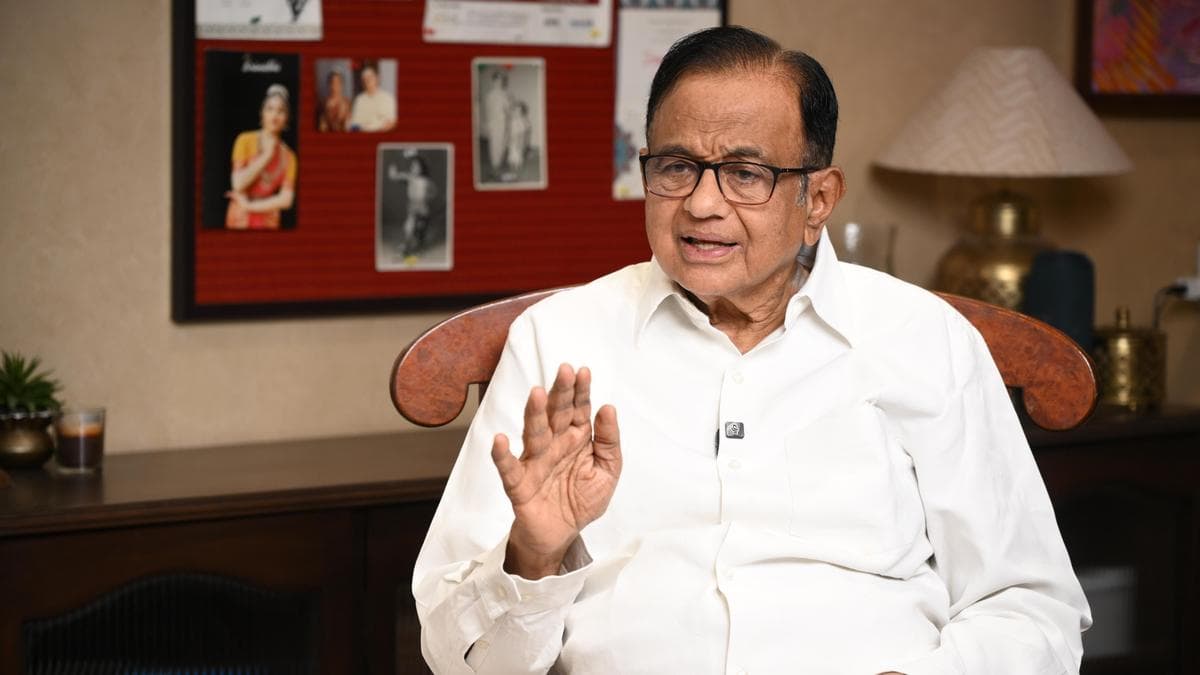
Senior Congress leader P. Chidambaram has said that a number of government offices in Tamil Nadu today operate with no corruption or something close to it, arguing that the state has a long standing template for clean administration that dates back to the Kamaraj era and can still be applied wherever leaders choose to enforce it.
Chidambaram pointed to former Chief Minister K. Kamaraj's tenure as the clearest example of what disciplined governance can achieve, recalling that during those years there was effectively no talk of corruption at all in the state's administration. He credited that record not to any special circumstance but to a straightforward formula, namely that a Chief Minister who insists on proper laws and consistent enforcement can keep corruption out of government almost entirely.
Extending that argument to the present day, Chidambaram suggested that the same discipline is visible in pockets of the state's bureaucracy right now, with several government offices functioning in a manner that leaves little or no room for graft. His remarks framed this less as a compliment to any particular administration and more as evidence that the Kamaraj model remains achievable rather than a piece of nostalgia.
The comments came as Chidambaram continued to hold up Kamaraj's legacy as a benchmark for how Tamil Nadu's institutions were built, crediting that era's clean governance with laying much of the groundwork for the state's later gains in education and industry. For Chidambaram, the throughline is simple: corruption is not an inevitable feature of government offices, it is a function of whether the person at the top chooses to enforce the rules.
By tying the historical example directly to the present, Chidambaram's remarks add to an ongoing conversation in Tamil Nadu about governance standards, coming at a time when the state's administration and its handling of corruption have repeatedly drawn public attention and comparison across successive governments.