
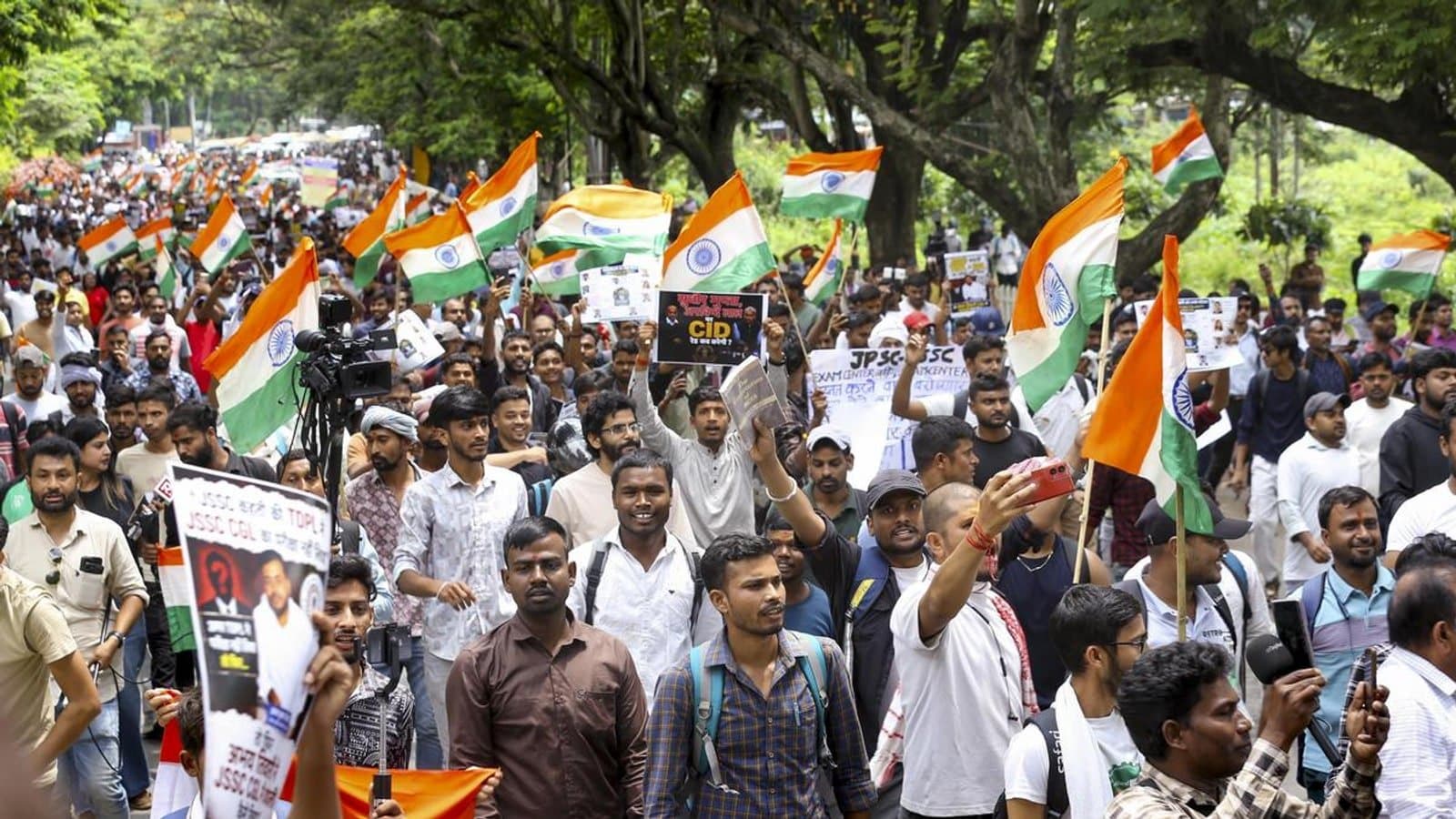
The Enforcement Directorate has opened an investigation into alleged irregularities in Jharkhand's recruitment examinations, officials said on Monday, focusing on the Jharkhand Staff Selection Commission's combined graduate level examination. The agency has acted on a First Information Report registered by the state police Criminal Investigation Department together with other complaints, and is proceeding under the Prevention of Money Laundering Act.
Separately and more consequentially, the Jharkhand Public Service Commission has emptied out. All three members, Ajeeta Bhattacharya, Anima Hansda and Jamal Ahmad, resigned on Sunday after the state CID summoned them for questioning over allegations that include paper leaks. Bhattacharya is the wife of the Jharkhand Mukti Morcha leader Supriyo Bhattacharyya.
It is worth being precise about what an Enforcement Directorate case does and does not do, because the distinction is being lost in the reporting. The students have been demanding an investigation by the Central Bureau of Investigation, which would examine the underlying offence: whether papers were leaked, by whom, and who paid for them. The Enforcement Directorate does not investigate that. Its jurisdiction under the money laundering statute begins with a predicate offence already registered by someone else, here the CID report, and from there it follows the proceeds. It can trace money, attach property and prosecute laundering. It cannot determine whether an examination was compromised, and it cannot cancel one.
So the agency that has arrived is not the agency that was asked for, and it is pointed at a different question. That does not make its involvement trivial. Following the money in a recruitment scandal can produce evidence that a CID inquiry might not reach, and property attachments are a form of pressure that summonses are not. But a student who has been sitting at the Jaipal Singh Munda Stadium since late July asking for the fourteenth civil services examination to be cancelled has not been answered by any of this.
There is a political fact here that cannot be left unstated, and it should be stated without pretending to know motive. A central agency has opened a case in a state governed by the Jharkhand Mukti Morcha, an opposition party, and one of the three commission members who resigned is married to a prominent leader of it. Two readings are available. One is that the money laundering route is where the evidence naturally leads. The other is that a central agency entering an opposition state at a moment of political difficulty for its government follows a pattern many have complained about, including parties now in office elsewhere. Both readings will be argued. Which is correct will be visible only in what the investigation actually does over the coming months, and in whether it pursues the money wherever it goes.
The resignations are the more revealing development. They are the first concrete outcome of this agitation, and they did not come out of the six rounds of talks that have been held since late July. They followed a summons. This page argued yesterday that multiplying negotiating channels was producing counterparties rather than decisions, and the sequence since has been consistent with that: nothing moved at the table, and three commission members went once an investigative agency asked them to appear.
The state government now says it has accepted 98 percent of the students' demands. That figure deserves the scrutiny any percentage deserves when the items being counted are not of equal weight. The demands the protesters have repeated from the first day are the cancellation of the tainted examination and an inquiry run from outside the state. If those two remain unmet, the arithmetic is doing a lot of work. The students appear to have reached the same conclusion, since they refused to call off the agitation and marched on the state assembly on Monday, which is the escalation their leaders had warned about.