
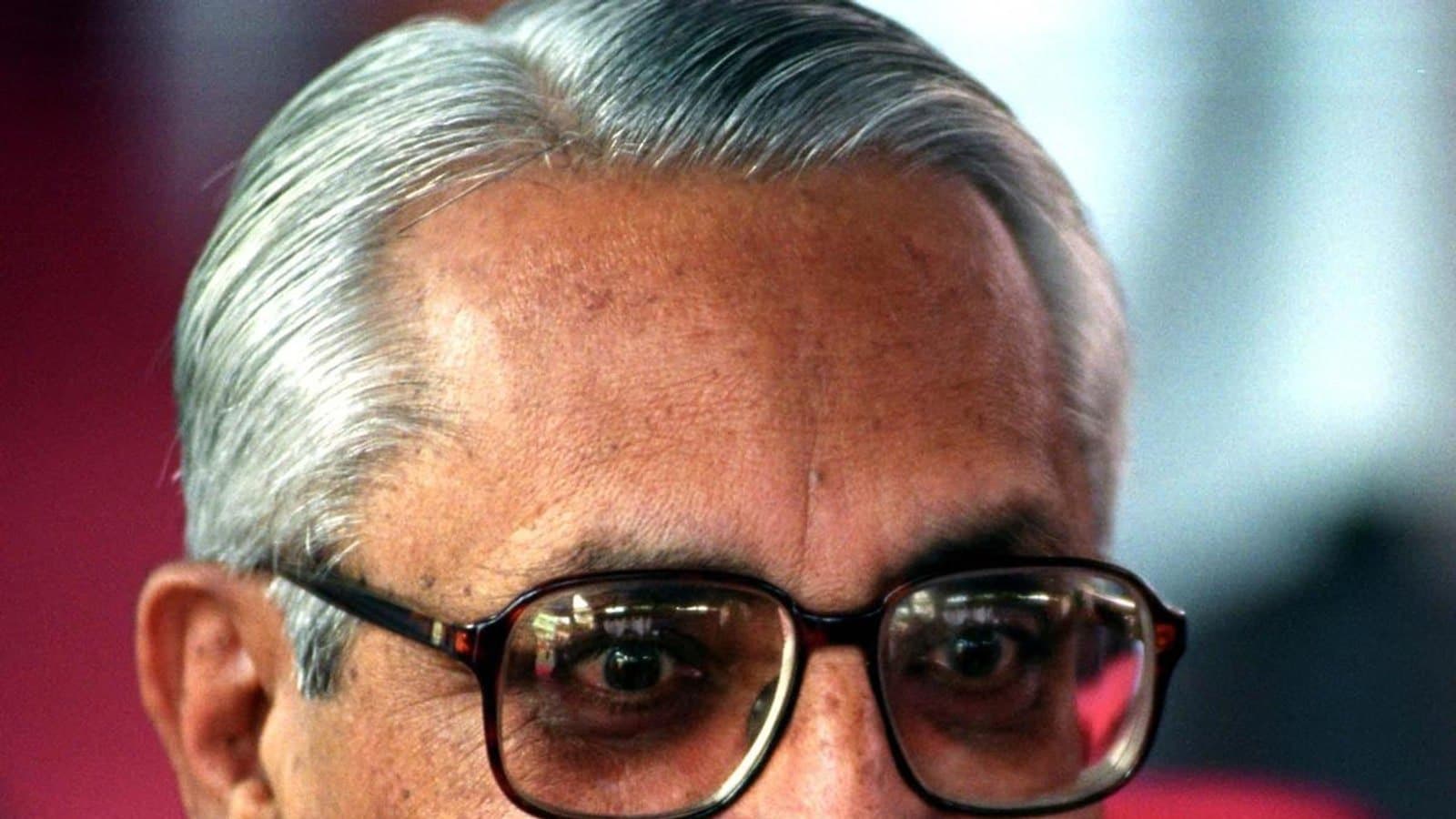
Justice Manmohan Singh Liberhan, who headed the commission of inquiry into the demolition of the Babri mosque at Ayodhya, has died in Chandigarh at the age of 87. The Punjab and Haryana High Court Bar Association president, Rohit Sud, said he died on Sunday, with the last rites held on Monday.
The career behind the appointment was a conventional and successful one. He began practising at the Punjab and Haryana High Court in 1964, was elected to the state Bar Council in August 1970 and served on it until February 1987, spending seven of those years as its secretary. He was elevated to the bench of the same court in February 1987, became Chief Justice of the Madras High Court in July 1997 and Chief Justice of the Andhra Pradesh High Court in February 1998. Two chief justiceships is a full judicial life by any measure.
None of that is what his name attaches to. On 16 December 1992, ten days after the mosque came down, he was appointed to head a one-man commission into the circumstances of the demolition. The speed of that appointment tells you what was intended. The commission was given three months to report.
It took seventeen years. The report was submitted on 30 June 2009 after 48 extensions, and was tabled in Parliament that November, a day after a newspaper published what were said to be its leaked contents. It stands as the longest running commission of inquiry in the country's history. Its central finding was that the demolition was not the spontaneous act it had been presented as at the time.
It is worth separating the man from the mechanism here, because the two get collapsed and the collapse is unfair to him. A commission of inquiry in India has no power to convict, sentence or remove anyone. It gathers evidence and produces findings, and what happens next belongs entirely to the government that received it. It also has no clock of its own: the deadline is set by the executive and extended by the executive, which is how a three-month mandate becomes 48 renewals. A judge running such a body cannot compel his own timetable.
The consequence of that design is what the seventeen years demonstrate. A report delivered in 2009 was addressed to a political world that no longer existed in the form it had in 1992. The government that appointed the commission was long gone, several of those whose conduct was examined had died or retired from public life, and the findings landed in a news cycle that received them as a contribution to an argument rather than as a settlement of fact. An inquiry that arrives after the questions have been answered elsewhere does not resolve anything. It joins the pile.
That is not an argument against inquiries. It is an argument about how they are built, and it is a live one, since India continues to reach for a retired judge and an open ended mandate whenever something happens that a government would rather not investigate quickly. A commission with a fixed statutory deadline that cannot be extended more than once, and a requirement that the report be tabled within a set period of receipt, would produce findings while they still bear on a decision someone has to take. Neither reform requires new thinking. It requires only the willingness to be told something inconvenient on a schedule.
Liberhan himself said little publicly about the delay over the years, and the obituaries will note the two chief justiceships alongside the commission. The fairer summary is that he was handed an instrument that could not do the job in the time it was given, and that this was decided long before he was asked to hold it.