
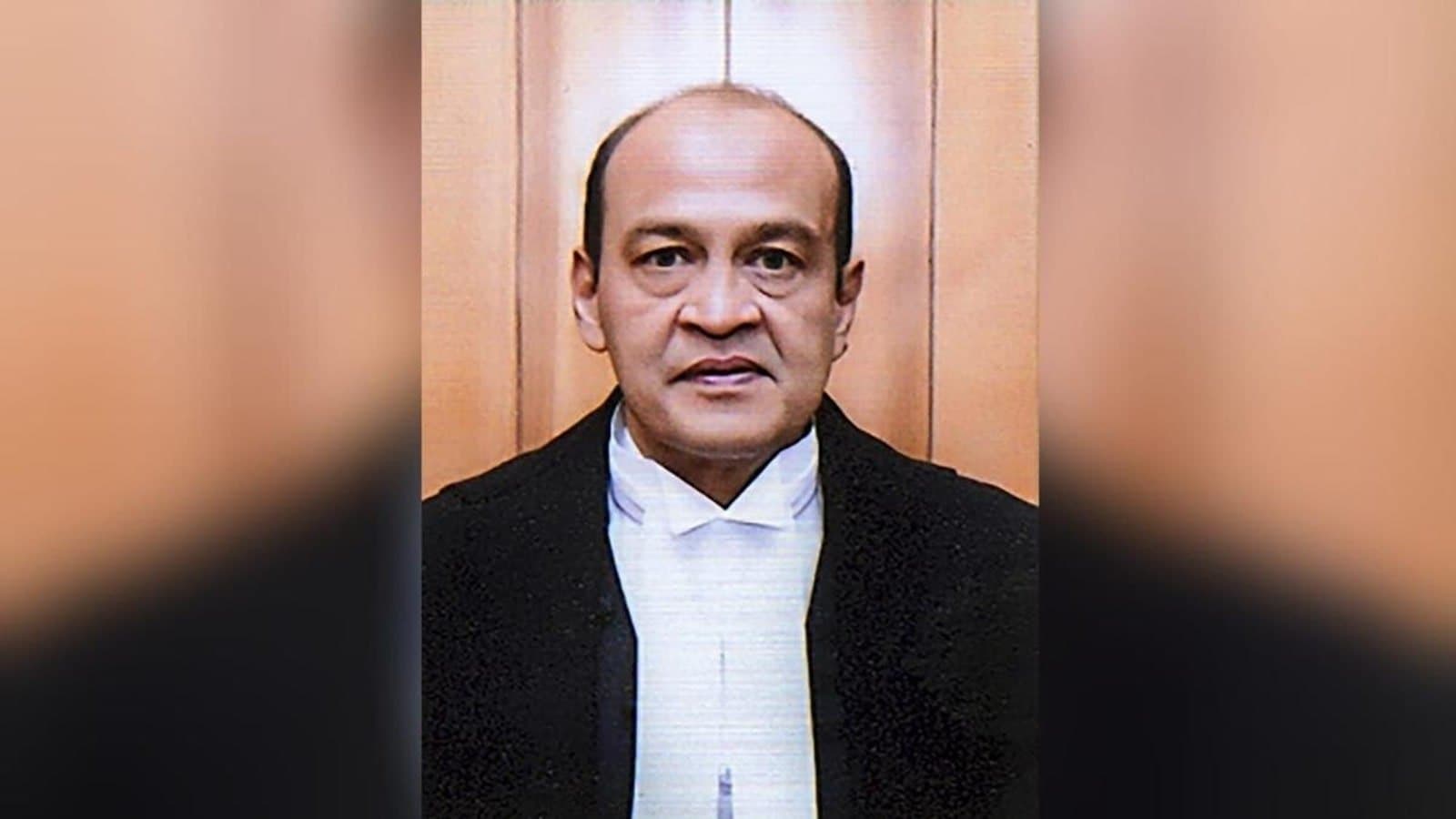
The three member committee constituted under the Judges Inquiry Act, headed by Supreme Court Justice Aravind Kumar, has found that all the charges against Justice Yashwant Varma are proved. The report holds that his explanation was evasive and unsatisfactory, and that he failed to account satisfactorily for the presence and ownership of the cash found in a storeroom at his official residence. The Secretaries General of both Houses laid the report in Parliament, in two volumes with the oral and documentary evidence recorded during the inquiry.
The matter began with a fire at Justice Varma's official residence on the night of 14 March 2025, after which firefighters are said to have found large quantities of burnt currency in a storeroom. An in-house committee set up by the then Chief Justice of India, Sanjiv Khanna, concluded that he had active or tacit control over that storeroom. He was a judge of the Delhi High Court and was sent back to his parent court at Allahabad. In July 2025 more than two hundred members of Parliament signed a motion for his removal, and the Speaker constituted the statutory inquiry committee the following month.
By the standards of Indian inquiries, this one worked. It was set up quickly, it took evidence, it reached a conclusion on the charges, and it reported within about a year. That is worth saying because the alternative is so familiar. Justice M.S. Liberhan, whose obituary this page carried nine days ago, was given three months to inquire into the Babri demolition and took seventeen years, and the report he eventually produced landed in a political world that had moved on. The Varma committee did not fail in any of those ways.
It failed anyway, in the sense that nothing follows from it. Justice Varma has resigned, and with his departure the removal proceedings have effectively become pointless. The Constitution gives Parliament exactly one sanction against a sitting judge, which is removal from office, and removal is prospective. It takes away a job. It cannot be applied to a person who no longer holds one. A judge who resigns while an inquiry is running converts a finding that the charges are proved into a piece of paper with no operative effect, and there is nothing in the design to prevent it.
The report itself acknowledges this in its closing formula, submitting the record for such further action as may be considered in accordance with law. That phrase is not a flourish. It is the committee handing the file onward, because the only route still open runs through the criminal law rather than through Parliament, and no criminal court has adjudicated any of this. Justice Varma has not been convicted of anything, and is entitled to that presumption whatever a statutory committee has concluded about the charges before it.
There is an oddity in the paperwork that turns out to be a dead end. The Law Ministry has not yet notified his resignation. That might sound like a lever, but the settled position, as people familiar with the appointment and removal process point out, is that a judge is deemed to have resigned once the resignation is tendered to the President and its copy circulated. It is not subject to acceptance. The formal acceptance and the notification that follows are administrative steps, not decisions, so the delay creates no opening.
What the case leaves behind is a gap that is easy to describe and has been visible for years. India has no mechanism to impose any consequence on a judge who steps down while facing an inquiry, because the single remedy it built can be escaped by the person it is aimed at, unilaterally and at any moment. A finding that charges are proved ought to carry something with it, whether that is a bar on post retirement appointments, a referral that actually proceeds, or a decision on benefits, and at present it carries only publication. Parliament now has a completed report saying the charges were established. It has no power left to do anything with it.