
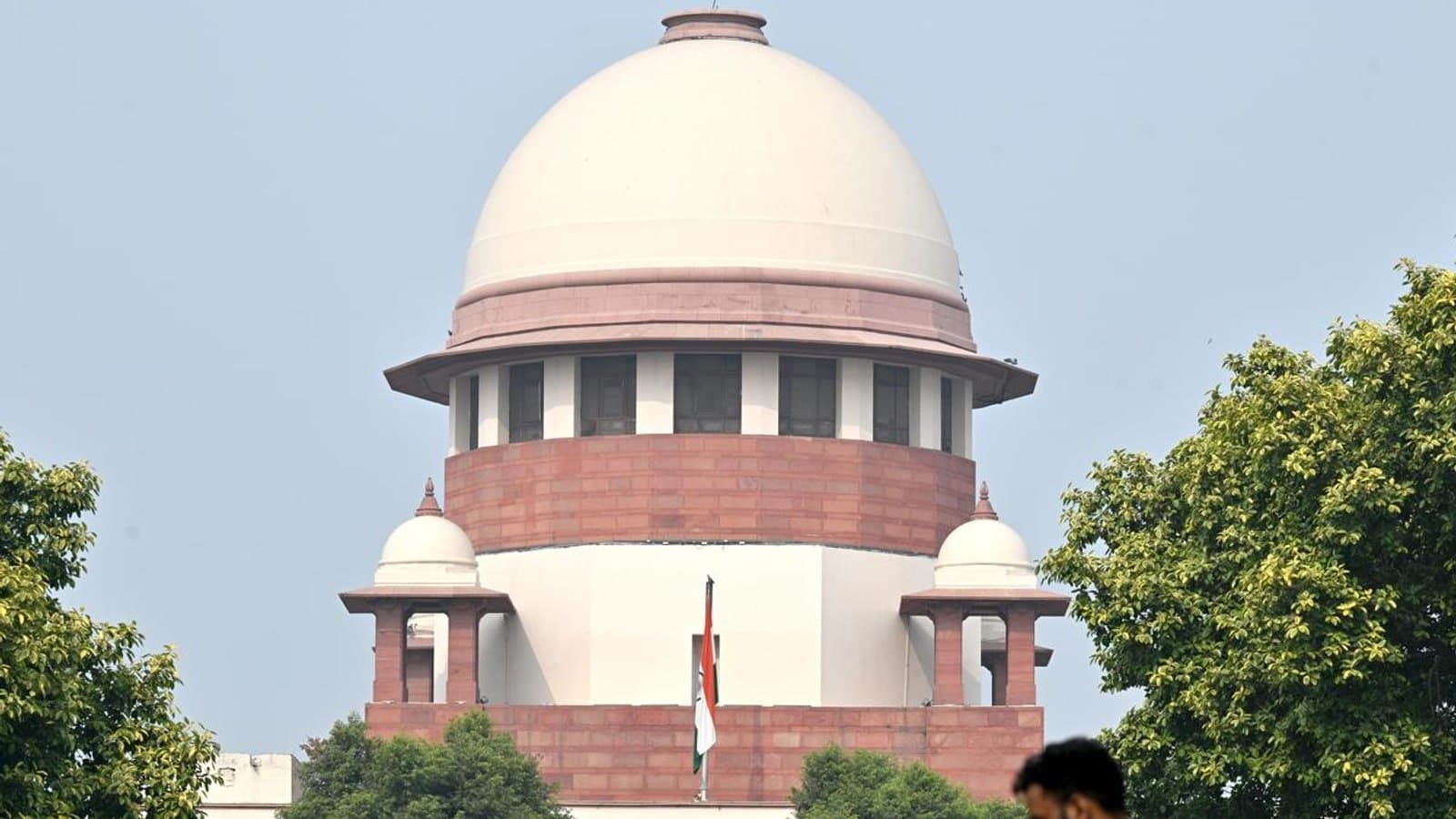
The Supreme Court has reserved judgment on Tamil Nadu's appeal seeking confirmation that the state may extend reservation benefits to people from backward classes, most backward classes, denotified communities and Scheduled Castes who convert to Islam. A bench headed by Justice Prashant Kumar Mishra heard the state on Friday and will pronounce its order later.
The dispute runs from a government order of 9 March 2024, under which Tamil Nadu, acting on its Backward Classes Commission, would issue backward classes Muslim community certificates to eligible people who had embraced Islam from those categories. The state's senior counsel, Mukul Rohatgi and Siddharth Luthra, described the purpose as ensuring that people from socially and educationally backward communities are not stripped of affirmative action benefits solely because they changed religion. The Madras High Court quashed that order as unconstitutional on 25 June, holding that a person who embraces Islam cannot claim the status of backward class Muslim.
The case arrived through an individual. A man from Thoothukudi district, born to Hindu parents, converted to Islam and changed his name, holding a 2015 certificate from the Sunnath Jamath at Kayathar recording the conversion. He applied for a community certificate as Muslim Lebbai, the tahsildar at Kayathar refused, and he went to court. The 2024 government order was notified while his case was running, and it worked in his favour until the High Court struck it down.
The legal question is narrower and more technical than the political noise around it, and it turns on whether two separate instruments are being confused. The first is the Constitution (Scheduled Castes) Order of 1950, whose Paragraph 3 states that a person professing a religion different from Hinduism, later amended to include Sikhism and Buddhism, shall not be deemed a member of a Scheduled Caste. That is an express religious exclusion written into the order itself. Justice Mishra observed from the bench that a 1951 Madras High Court decision, G. Michael versus S. Venkateswaran, concerning a Scheduled Caste member who converted to Christianity and sought to contest a reserved seat, upheld the validity of that paragraph and has held the fort for seventy five years.
The second instrument is the backward classes list, which a state draws up under Articles 15(4) and 16(4) on the basis of social and educational backwardness. Tamil Nadu's argument is that this list contains no religion based exclusion at all, that the 1951 judgment decided what Paragraph 3 of the Scheduled Castes Order means and nothing more, and that it therefore does not prevent a state from classifying someone who was socially and educationally backward before conversion as a backward class Muslim after it. On this reading the High Court applied the logic of one list to a notification issued under the other.
Whether that reading is correct is now for the court, and the oral observation from the bench about seventy five years of settled law is a signal rather than a finding. But it is worth being clear that the two questions are genuinely different. One asks whether a religious test written into a presidential order is valid. The other asks whether a state may look at a person's measured social position and place them on a list that was never defined by religion.
The High Court's reasoning went somewhere else again, and this is the part worth reading closely. It held that a Hindu who converts to Islam does not carry the benefits of the previous caste forward, and that the convert's standing within Islam is not determined by the caste he belonged to before. It then went further. Noting that Christian missionaries and Islamic preachers have both presented their religions as offering social equality in contrast to caste hierarchy, the court said it was disingenuous to then claim hierarchy exists within Islam, and that classifying some sects as backward and others as forward runs against Quranic injunctions, since Islam seeks an egalitarian society in which everyone is equal before God.
That is a doctrinal argument about what a religion teaches. Backward class classification, as Indian law has developed it, is an empirical exercise about what a person's circumstances are. A commission collects evidence about education, occupation and social standing, and the list follows the findings. The two modes of reasoning can point in opposite directions, because a faith may hold that all believers are equal while the people who profess it continue to occupy the position their families held before conversion. Which of those a court should be measuring is, in substance, what has been reserved for judgment.
There is a serious argument on the other side and it should not be flattened. Allowing caste identity to survive conversion can be said to entrench the very structure affirmative action is meant to dissolve, and it opens a route by which state lists expand without the underlying disadvantage being re-examined. Those are real objections. They are also arguments about what the policy ought to be, which is a different thing from whether the state had the power to make it, and it is the power question the bench has taken away to decide.