
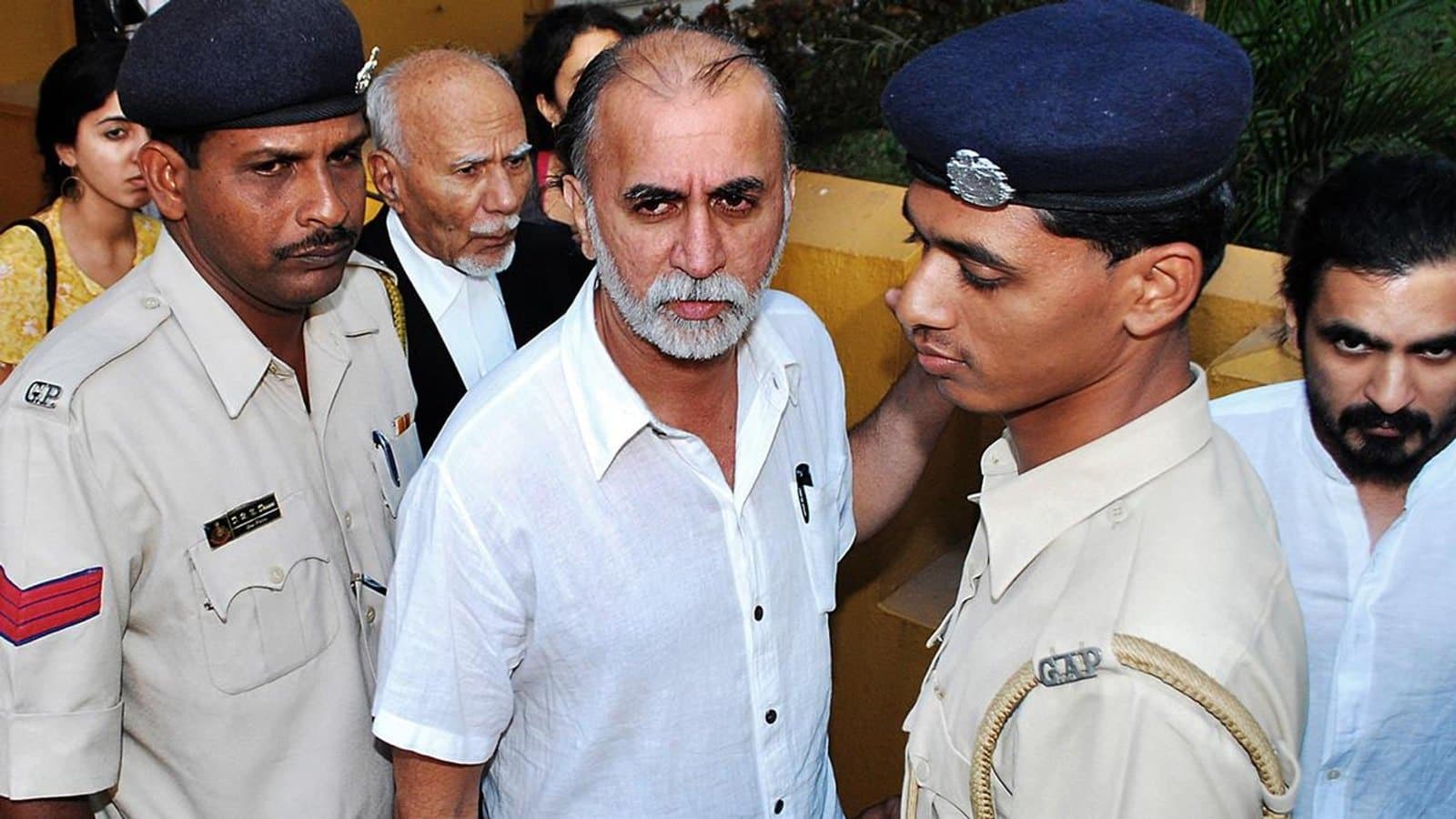
The Goa bench of the Bombay High Court on Thursday convicted the former Tehelka editor Tarun Tejpal of rape and set aside the sessions court order that had acquitted him in 2021. The bench of Justices Neela Gokhale and Amit Jamsandekar said it would pronounce the sentence in the afternoon.
The conviction is under section 376(2)(f) of the Indian Penal Code, which covers rape by a person in a position of trust or authority over the woman, along with section 354(a) on sexual harassment and section 354(b) on using criminal force with intent to disrobe. The offence under section 376 carries a minimum of ten years and a maximum of life. Tejpal's counsel, Aabad Ponda, asked for the minimum. Solicitor General Tushar Mehta, appearing for the Goa government, sought the maximum, saying the sentence should carry the message that no means no. Tejpal, present in court, asked for leniency, describing himself as a political victim and as the father of two daughters.
The case concerns allegations by a former junior colleague that he assaulted her in a hotel lift during the ThinkFest event in Goa in November 2013. He was acquitted by the trial court in 2021, and the Goa government appealed.
That last sentence contains the part of this story that deserves the most attention, because it is the part that is rare. An acquittal in a sexual assault case can normally only be challenged by the state, and the state usually does not bother. Prosecution appeals require a government to decide that a case it lost is worth another five years of law officers and hearings, in a matter with no political constituency pressing for it. Most such acquittals therefore end at the trial court, whatever their reasoning. Here Goa appealed and stayed with it for five years, which is why an appellate bench got to read the same record and reach a different conclusion. Without that decision, taken quietly in 2021, Thursday's judgment does not exist.
The provision he has been convicted under is also worth pausing on. Section 376(2)(f) is the aggravated form of the offence, and it exists because the law recognises that a position of trust or authority makes the same act worse rather than more excusable. Tejpal was the editor in chief. The complainant was a junior employee at a company event. That is precisely the relationship the sub-section was written to capture, and it is the same structural problem that surfaced in the wrestlers' case decided three days ago, where the conduct alleged occurred inside a federation that controlled the complainants' careers. In one case the criminal law had a provision fitted to the power relationship and an appellate court applied it. In the other the complainants are preparing an appeal of their own.
The plea in mitigation is a familiar one and is worth naming for what it is. Having daughters is not a factor the law weighs, and a claim of political victimisation is an argument about motive that a court has now considered and rejected on the evidence before it. Whether the sentence lands at ten years or higher is the only question that remained open when the judgment was delivered.
The other number in this case is thirteen. The incident is alleged to have taken place in November 2013 and the conviction came in August 2026. Between those dates sit a trial, an acquittal, an appeal and five years of waiting. For the complainant, that is most of a working life spent inside a case. Nothing in Thursday's ruling addresses the delay, because no ruling can. It is the price of a system in which the only route to a finding runs through a criminal court, and the only route past a bad first outcome runs through a government willing to appeal.