
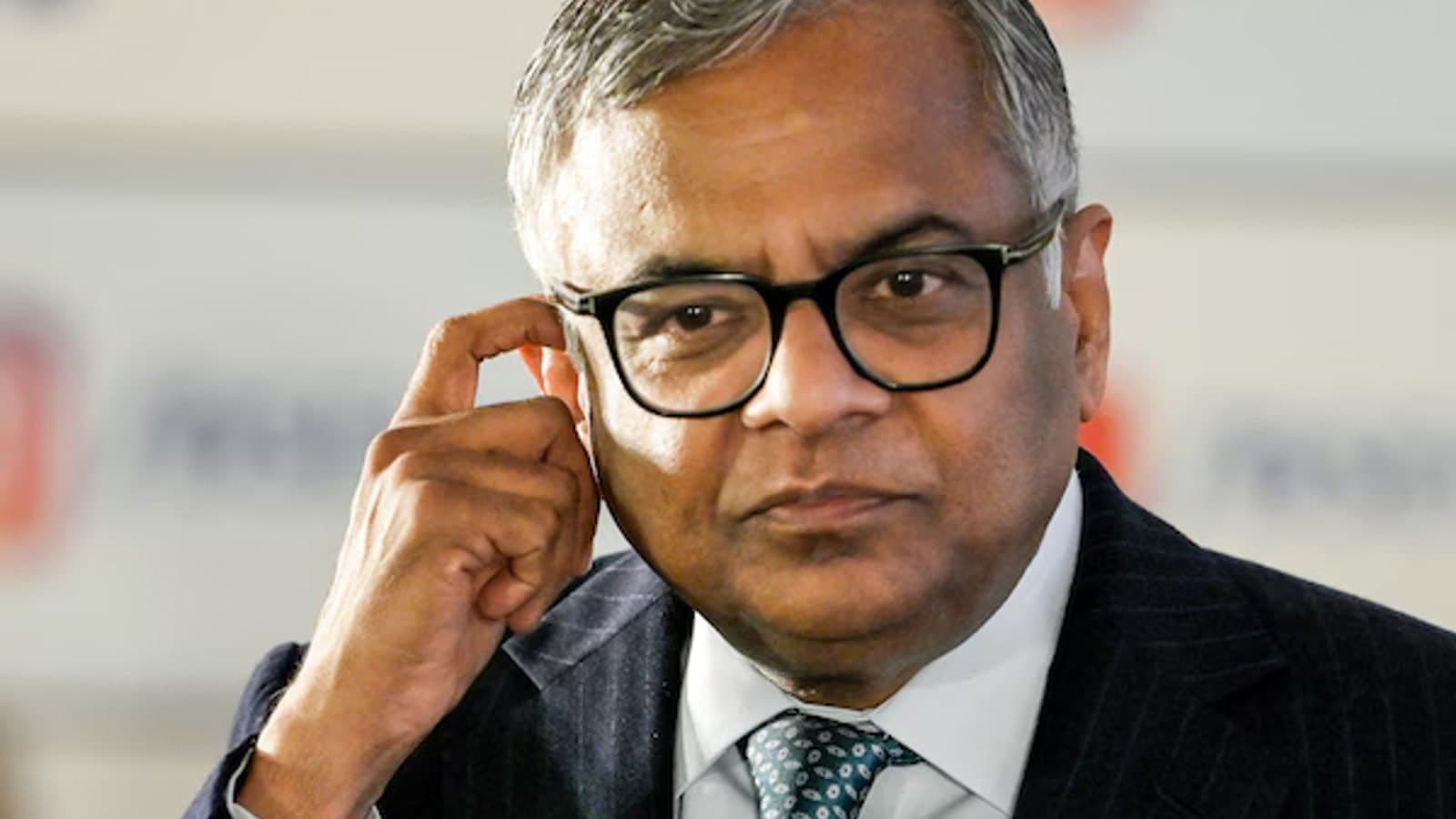
N. Chandrasekaran has told the Tata Sons board that he will not seek reappointment when his term ends on 20 February 2027, and has asked it to settle the succession quickly. He has spent forty years at the group and a decade running its holding company, having joined the Tata Sons board in October 2016 and taken charge as chairman in February 2017.
The sequence he set out in his statement is the story. Sir Dorabji Tata Trust and Sir Ratan Tata Trust, which control the holding company, unanimously resolved to recommend a further five year term. The Tata Sons Nomination and Remuneration Committee recorded and recommended it. The resolution went to the Tata Sons board on 24 February 2026. It did not carry, because one board member did not support it, and in the absence of unanimous support Chandrasekaran chose to defer the decision. Six months later nothing had been resolved, and he has now removed the question by answering it himself.
He did not name the dissenter. It is reported that the Tata Trusts chairman Noel Tata, who also sits on the Tata Sons board, had not cleared the reappointment. That remains an attributed report rather than a confirmed account, and Chandrasekaran's own statement identifies only that a single member withheld support.
The governance point is the one worth dwelling on, because it is unusual and it is not a legal requirement. A board resolution ordinarily carries by majority. Nothing in company law obliges a board to be unanimous about who chairs it, and on the numbers described the resolution had the owners, the nominating committee and the rest of the board behind it. What defeated it was a convention that the chairmanship should be settled without dissent, and a chairman who honoured that convention rather than being installed over an objection.
It is not hard to see where that convention comes from. Chandrasekaran took the job in the aftermath of Cyrus Mistry's removal, a majority board action that produced years of litigation and a great deal of damage to the group's reputation for orderly governance. Any Tata Sons chairman who has watched that would be reluctant to accept a term granted over a dissenting owner representative, because the last chairman to be dealt with on a split board fought it in the courts for years. The unanimity norm is a scar from 2016. It has now cost the group its chairman by an entirely different route.
The other structural feature is that the trusts and the board are not cleanly separated. When the person who chairs the majority owner also sits on the board of the company it owns, a disagreement inside the boardroom is not a difference among directors. It is an ownership signal wearing a director's hat, and the rest of the board has no obvious way to overrule it without picking a fight with the shareholder.
Markets priced the ambiguity immediately. Tata group stocks fell by as much as four percent on Wednesday, with Tata Consultancy Services down 4.1 percent and Tata Motors PV, which owns Jaguar Land Rover, down 2.8 percent. That is the cost of not deciding, and it arrived on the day the uncertainty was resolved rather than during the six months it ran.
What Chandrasekaran has actually done is convert an open question into a deadline. His term ends in February 2027, which leaves roughly six months, the same period the board has just spent failing to reach a conclusion. He noted in his statement that several strategic projects are at critical stages and that employees, investors and partners need clarity about who will lead beyond February. The board that could not agree on renewing a chairman now has to agree on replacing one, on a clock, and under the same convention that produced the impasse.