
BenchmarksClosed 23 Oct
  • NIFTY 5022,600.00↓ -0.39%
  • SENSEX73,123.83↓ -0.17%
  • NIFTY Bank54,287.35↓ -1.16%
  • USD/INR94.94↑ +0.67%

Subscribe
BusinessTrucking

Why Many Indian Truckers Are Avoiding Modi's New Expressways

India has spent roughly $130 billion building wider, faster expressways to speed up truck freight, but toll data shows many drivers are still choosing the older, more congested highways running alongside them.

By India Max StaffPublished 2 min read
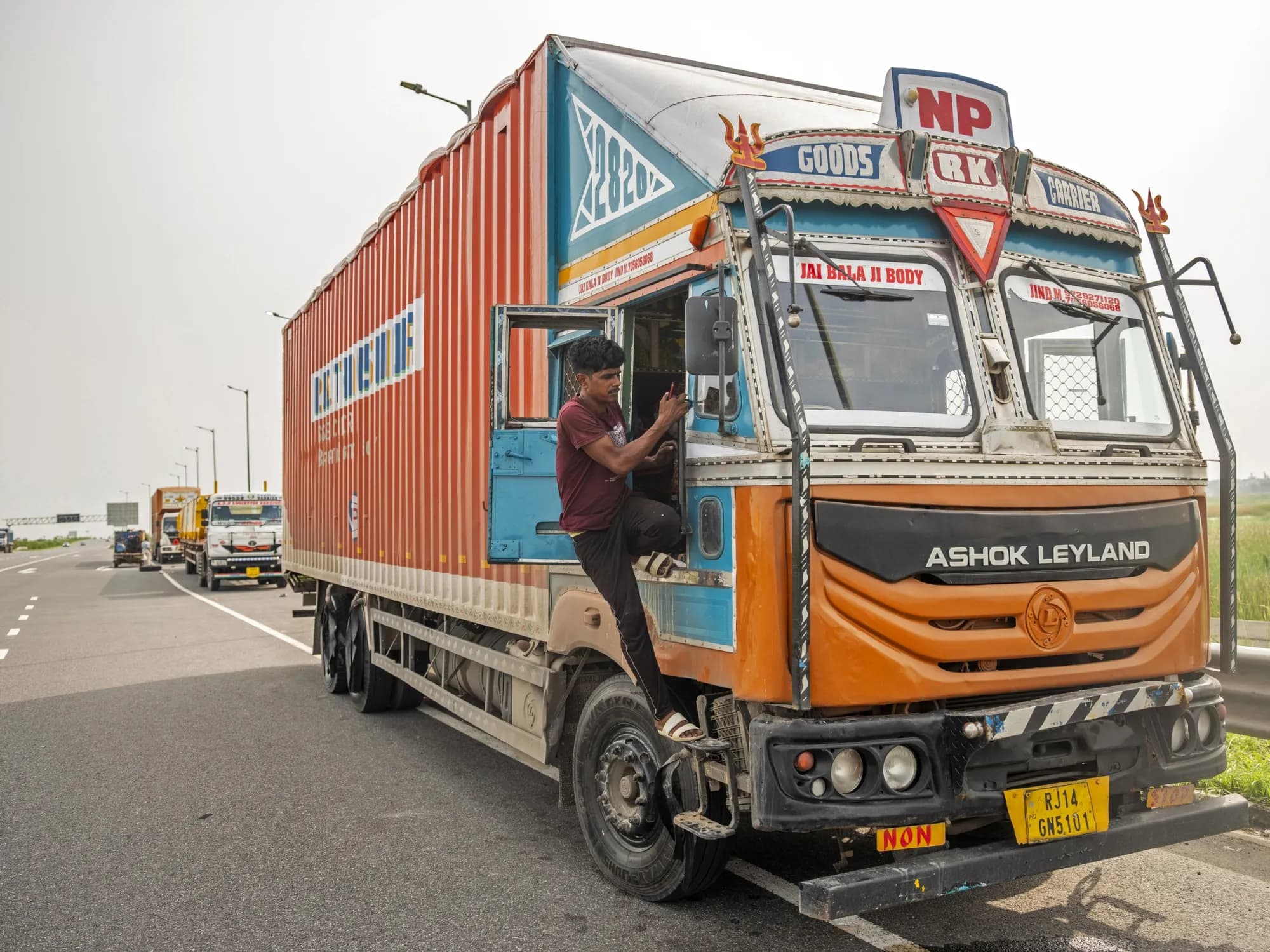
A truck driver climbs into the cab of his Ashok Leyland truck parked on an Indian highway
A truck driver climbs into the cab of his Ashok Leyland truck parked on an Indian highway · Photo: Bloomberg

India has spent roughly 130 billion dollars building wider, faster expressways meant to speed up truck freight across the country, but toll data shows many truckers are still choosing the older, more congested highways that run alongside them. On the roughly 840 mile Delhi-Mumbai Expressway, toll records show around 386,000 truck journeys in the first half of 2026, compared with 1.4 million trips on the older parallel highway over the same period. The gap was even wider on the 130 mile Delhi-Dehradun Expressway, which recorded a little over 8,500 truck passages against roughly 61,600 on the conventional route nearby.

Part of the reason, drivers say, comes down to what sits beside the road rather than the road itself. On older highways, cheap food stalls, tyre repair shops and rest stops are rarely more than a few miles apart, built up over decades of trucker traffic. The newer expressways, designed for speed with limited access points, often leave such facilities scarce, a gap illustrated by accounts of truckers whose vehicles broke down on the new roads and had to travel much further to find help than they would have on the older highways.

The stakes behind the expressway push are large. Government estimates have put India's logistics costs at somewhere between roughly 8 and 14 percent of GDP depending on the measure used, well above levels in many other major economies, and officials have cited figures suggesting better road infrastructure could save the economy trillions of rupees a year through lower fuel use, fewer delays and better vehicle utilisation. Road transport contributes about 4.5 percent of India's GDP and employs more than 10 million truck drivers and related workers.

The pattern points to a mismatch between an expensive new highway network built for speed and the informal roadside economy that still shapes where truckers actually choose to drive, one planners will likely need to address if the new expressways are to draw the volume of traffic they were built for.

Tags

  • Trucking
  • Expressways
  • Narendra Modi
  • Logistics
  • Infrastructure
Keep scrolling for more stories